MATH ShoutOuts!
Just give/comment your shoutouts.
How To Teach Mathematics in a Fun Way?


Just give/comment your shoutouts.
How To Teach Mathematics in a Fun Way?
15 Fun Ways to Practice Math
“Let’s practice math facts!”
That is what your students will say once you introduce some of these fun ideas and games to the classroom. When you create a strong love and appreciation for math at an early age, you’re setting kids up for a successful future.
Between playing bingo, baking in the classroom and even bringing in a little blast from the past, you’ll have students begging to do more math.
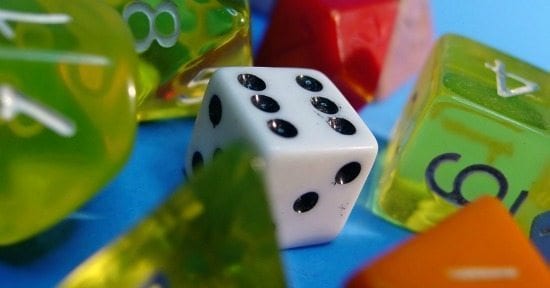
1. Roll the dice.Dice can be used in so many different ways when it comes to math. Whether you’re practicing multiplication facts or fractions, try having students create their own math problems with the roll of the dice. They can create fractions, simple multiplication problems or even word problems using dice. This can also be a fun way to put together a homework assignment: Students roll the dice during class, then take the problems home to solve.
2. Play math bingo.Bingo is always a class favorite, and you can play it with any number of students. You can buy math bingo kits online (or win your own in our “I Love Math” Classroom Giveaway). You can also make up your own. The way it works is students have to solve math problems in order to know what number to mark off of their sheet.
3. Find fun ways to teach multiplication.Lucky for you, we have 22 fun, hands-on ways already gathered right here. You can use Cheerios, cards, dominoes and many other ideas. Students will love practicing their facts with these ideas.
4. Turn regular board games into math games.Pretty much any game that involves numbers can be turned into a way to practice math. Yahtzee is an easy example: As you’re rolling the dice, have students ask one another math questions based on the numbers they roll. Even the card game Uno can help with practicing math. Have students add, subtract, multiply and divide based on the the numbers on the cards.
5. Play War.The classic card game War is always a good way to reward students when they have a few extra minutes here and there. Have several decks of cards in your classroom and use this as an incentive, either when they finish assignments or just as “bonus” time that they can earn. Make sure they are solving math problems when they lay their cards out, though.
6. Go online.You can find lots of free math games online, and students will love this break in the day! Some of our favorites are Sushi Monster, Aplus Math, Prodigy, Mathville, Math Cats and Math Playground. There are so many out there, so take some time to really explore this vast online world.
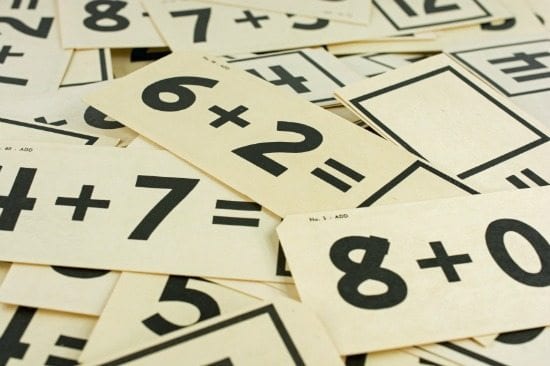
7. Make your own deck of cards.While playing War and making math questions out of the cards is fun, you can also take it to the next level by creating your own math problems on playing cards. Just take an old deck of cards and cut out pieces of paper that will cover each card entirely. Then create your own math or word problems. By covering the entire card, you’re really just using the card as a template. You could also make cards out of poster board or recycled cereal boxes. But this method is great because they all fit nicely into the card box, making for easy and portable storage.
8. Make a recipe.When you have to follow a recipe—especially when you have to adjust the recipe—there’s a lot of math involved in making sure you get it right. Put those skills to the test by making no-bake cookies or even slime. For more of a challenge, have students double, triple or even quadruple the recipe.
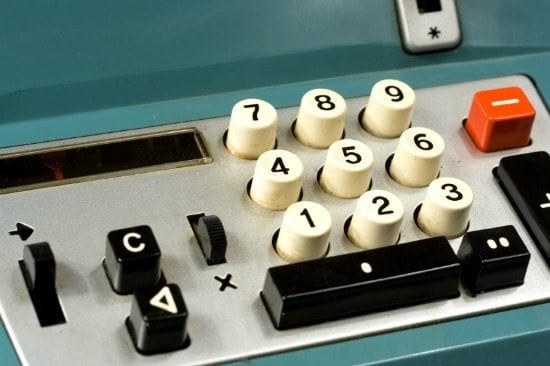
9. Borrow or buy an adding machine.Do you remember the simple joy you had when playing around with an adding machine? If not, go to your nearest thrift store to find one! Students will love being able to punch in numbers and have the math problems come out on real paper. It’s a simple yet awesome way to get them excited about practicing math.
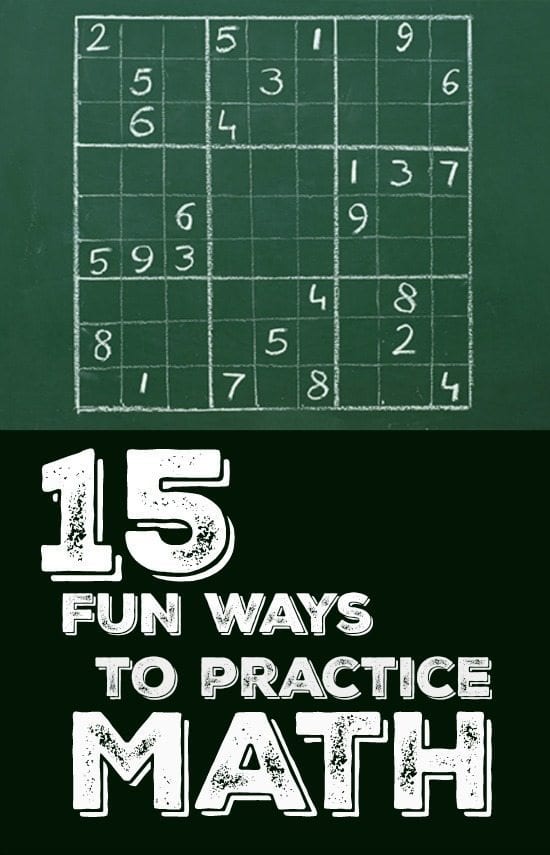
10. Download Sudoku and Kakuro puzzles.Sudoku is definitely a good way to practice math, and you can find puzzles, books and samples all over the place. Not as many people know about Kakuro puzzles though. They are similar to Sudoku in that they come in a grid, but the rules are different. Here’s a good site that explains the game and offers free downloads to play.
11. Download math apps.This is another area where you can find oodles of options. With most schools having access to tablets, this is a great way to make practice fun for your students. Look for math games best suited for your age group (most apps have age recommendations). A few we recommend include Mathmateer, Thinking Blocks Multiplication and Crazy Times Tables.
12. Create a math Concentration game.You know the classic game Concentration? Create your own version using math problems or cutting up old flash cards. Here’s how: Have the math problem on one card and then the answer on another. So you might have 4 x 5 on one card, and then another card would have 20. Have the students find each answer for a correct match. You could even color-code the cards to make it easy to distinguish questions vs. answers.
13. Have a math scavenger hunt.Get ready to be the most popular teacher at your school! Scavenger hunts are already exciting and fun. One clue leads you to another, and then another, until there’s finally a prize at the end. For this scavenger hunt, make math problems the clues. So in order to move on, students have to really think about the problems and give the correct answers. Be sure to make them challenging so the reward (maybe 10 minutes of extra recess) is worth it. We suggest pulling out all your hardest math problems and even dividing up into teams for a little friendly competition.
14. Weave math into other subjects.You know those math problems you created earlier with a deck of cards? You should always have them around, no matter what subject you’re working on. In the middle of social studies, pull out a math card. Or quiz students as they’re lining up to go to lunch. All these little practice sessions can really add up in developing skills.
15. Cut up the worksheet.A piece of paper can be oh-so boring to kids. Try cutting up the math worksheet you were planning to give your students. Fold up the various problems and put them in a box. Then let each student draw one to work on. This is a really simple idea, but it can add just the variety you need.
The fantastic new ways to teach math that most schools aren’t even using
Here are four small changes new teachers can make to help students
This is an exciting time to be a mathematics teacher-educator.
In the past two decades, we have developed a much better understanding not only of how children learn math, but also of how to teach math – and how to prepare teachers to teach math. A short (though incomplete) list of teaching practices that we know work to support student learning includes posing challenging tasks that connect to children’s prior understandings and out-of-school experiences, providing opportunities for children to make sense of and talk about mathematics, and promoting the use of mental mathematics based on patterns in our number system.
Yet it is also a challenging time to be a mathematics teacher educator because these teaching practices are not being used in most classrooms and schools. Further, there are many constraints limiting the use of these practices — ranging from high-stakes testing to crumbling schools.
Here, I am advocating for an approach to mathematics teacher preparation that takes seriously our responsibility to support novice teachers in making small changes in the status quo of mathematics teaching while working together with teachers to create more transformational changes.
1) Ask students “why” at least once every day. Why did that strategy work? Why does that strategy make sense? Why would this work for all numbers?
2) Instead of looking only for whether a student’s answer was right or wrong, focus on what was right in the student’s work. Then build on what the student did understand in your next discussion and next task.
3) Use your textbook as a tool. Find meaningful tasks in the materials — or tasks that could be meaningful and accessible for students with small changes in numbers or contexts.
4) Provide at least one opportunity each day for students to solve and explain problems mentally (without pencils, paper, calculators, or computers). This promotes students’ sensemaking, creativity and, most importantly, their sense that they are mathematicians.
At the heart of all of these changes is the idea that children learn best when they have opportunities to explore and make sense of mathematics and when teachers have opportunities to hear and respond to children’s ideas.
Related: Catch them before they fall: A summer math program aims to improve odds for success in algebra
While these kinds of small changes can help teachers develop their teaching practices and can lead to increased learning for their students, classroom-level changes will ultimately only lead to, at best, incremental change in the status quo of the larger systems of mathematics education in the United States. However, expecting teachers to have the sole burden for changing these systems is not only ineffective, but also ethically problematic.
Thus, as teacher educators, we must also work together with teacher candidates and teachers to advocate for systematic changes in systems that continue to perpetuate oppression in mathematics education, that allow for the same groups of students to be denied opportunities to learn rigorous mathematics year after year, and that are silent in the face of crumbling and unhealthy school buildings.
To this end, teacher educators and teacher preparation programs must engage together with prospective and practicing teachers in work that: values advocacy skills and a sense of agency as important aspects of teaching; insures all students have access to relevant high-level curriculum; utilizes assessments that reflect the content and practices that we want all students to know and be able to do and supports students in reaching those goals; and understands schools are just one part of communities and that schools and students cannot be healthy unless and until their communities are healthy.
I began this essay noting that this is both a challenging and exciting time to be preparing teachers to teach mathematics. The challenge is that the goal of providing meaningful and equitable mathematic education to all students has been a persistent, yet elusive, goal in the United States for many decades.
The excitement comes from the knowledge that we know what to do — in both K-12 and higher education — to prepare teachers to teach mathematics in meaningful and equitable ways. It should go without saying that the kinds of work described above require teachers who know their mathematics content well. However, the best mathematics teachers will be the ones who have been prepared to empower their students as mathematicians and to teach students that mathematics makes sense.
We know how to do this, but we need to be willing to work together across all of our communities to make the kinds of instructional practices and systemic changes described above accessible to every teacher and every student in the United States.
Corey Drake is associate professor of teacher education and director of teacher preparation at Michigan State University’s College of Education. She would like to thank Tonia Land, Tonya Bartell, Erin Turner, Julia Aguirre, Mary Foote, Amy Roth McDuffie, and Terry Flennaugh for pushing her thinking and work in mathematics teacher preparation.
How to make math class interesting?
By Murray Bourne, 05 Oct 2011
I received this question recently from reader Maria in the Philippines:
[Note about time needed: Most of the following suggestions will take time away from your normal curriculum. You need to make a decision - do I plow through all of the topics but leave my students bored and unmotivated, or do I spend some time getting them excited about math (and hopefully, motivated enough to go and fill in any gaps by themselves)?
Note about knowledge needed: The following are basic suggestions. Of course, you are encouraged to find out a lot more about each one before trying them out.]
Some possible ways to fix this:
When students have no idea what the original practical problems actually mean, how can they be expected to understand the abstractions of those problems (using the formulas)?

Use watermelons to teach calculus
Instead of starting each topic with a formula, start with concrete examples of the problems that were originally solved using that math. Then, help the students see how the math theory can help to solve such problems by showing them the thinking behind the solution.
One example of this approach is the watermelon volume problem at the bottom of this page: Volumes of Solid of Revolution.
Another thing to consider is these days students spend less time playing outdoors than they used to, so they have less experience to draw on when it comes to concepts like velocity, acceleration, gears on a bike, and generally how things work. So when we say "Imagine ...", students often find it hard to imagine what you are talking about due to lack of concrete experience with that concept.
This video about the FIRST program gives an idea of what's possible:
Problem is, there's no attempt to motivate the learners.
It is good to pique curiosity with a photograph, a short video, a diagram, a joke, or perhaps a graph. This trigger should outline an interesting problem in your local area (so students can relate to it better and feel more ownership).
Here's one: Engineered Drought? (China will continue to face severe water shortages, This will have serious implications for the millions of people living in Southeast Asia, since China will either have to buy (or take) water.
Twenty Global Problems and Twenty Years to Solve Them
Earth killer – composite trigonometry CO2 graph
Of course, refer back to your various real-world problems as the students learn more and eventually, give them a chance to propose a solution.
To quote John Allen Paulos:
Some examples:
See:
They have little say in what the topics are (that's usual for most formal education) and the exact same assignments are given to everyone. It's not surprising there is little enthusiasm for such "one size fits all" approaches.

Computer-generated flower
We are all creative, and we all enjoy being creative, but in most school systems creativity is discouraged. (See the excellent TED talk, Sir Ken Robinson: Do schools kill creativity?)
There are many ways we can encourage creativity in math. Technology is one avenue - get students to use creative means to describe a mathematical concept (it could be a video, an animation, a diagram or perhaps a concept map).
Such individualized assignments get them thinking about the bigger picture, encourages creativity, and is more likely to generate feelings of ownership than the normal mass-produced assignment.
In your class, get the students to do meaningful activities. These could include:
But it's great to trigger the students into asking their own questions. This is more likely if the question is conceptual and interesting, rather than calculation-based. The above example (from Asking good questions in the mathematics classroom) is more likely to illicit a lot of genuine discussion than the normal text book question.
Here's another one from that paper:
Once students get used to this level of conceptual question, it is more likely they will ask deeper, more meaningful questions about what is going on.
One simple idea to get the students into this is to get them to write questions for the mid-semester test (say). You could assign sub-topics to small groups of students and get them to propose 2 or 3 questions. It's surprising how well this demonstrates whether students really do understand what they've been doing. It also lets them see math from a broader perspective.
Then, get them to share their questions around the room and solve them. Some of them may be impossible to solve - it can be transformational when they discuss what's wrong with the question and then feed back their conclusions to the question posers.
They could do this using Google Docs (or a wiki) so there is a record of the thinking and problem solving process.
Students don't see the value of writing about their math thought processes at first, but once they see how it can help them clarify their doubts, they become more enthusiastic about it.
This short article includes some ideas on the kind of questions you can use to prompt reflection in math:
Math journal with suggested prompts
Here are some more good ideas:
How to encourage critical thinking in science and math
This can be creative and hands-on (yet another thing that's missing in many math classes).
It would be really powerful if the item they need to make is related to other subjects they are studying. This helps students work out the big picture and make connections between what they need to know.
Some ideas:
Learn math by making things
If you still need some inspiration, (and more examples) you can always look at the 700 or so articles on math in SquareCirclez:
SquareCirclez sitemap
Do any readers have more to add? Please use the comments box below.
Pls give some tips on how to make math interesting to college students.Well, Maria, it's not only college students that find math boring, so this set of suggestions is for all math teachers (and I hope students benefit from it, too!).
[Note about time needed: Most of the following suggestions will take time away from your normal curriculum. You need to make a decision - do I plow through all of the topics but leave my students bored and unmotivated, or do I spend some time getting them excited about math (and hopefully, motivated enough to go and fill in any gaps by themselves)?
Note about knowledge needed: The following are basic suggestions. Of course, you are encouraged to find out a lot more about each one before trying them out.]
1. Make it meaningful
Many math courses suffer from the following issues:- The teachers don't know why they are teaching particular math topics, and they often don't know what else the students are learning in other subjects.
- As a result, the students don't know why they learn those math topics, either. The common question, "Why do we have to learn this?", is a reasonable one. Do you have a good answer, beyond "It's in the exam" or worse, "Because it's good for you"?
Some possible ways to fix this:
- Find out where the students will use each math topic you teach (it may be in their science class, or some engineering subject). It's great when you can use actual examples from those other subjects and let the students know that's where they'll use each math topic.
- Help students make connections between the math topic and the "real world". If you're not sure how it's used in the real world - do a search!
2. Start with concrete examples - leave the abstract concepts to later
Math is largely about abstraction. Mathematicians for centuries have thought about real problems and come up with practical ways to solve those problems. Later, they have generalized the process, usually presenting the solution using algebraic formulas.When students have no idea what the original practical problems actually mean, how can they be expected to understand the abstractions of those problems (using the formulas)?
Use watermelons to teach calculus
One example of this approach is the watermelon volume problem at the bottom of this page: Volumes of Solid of Revolution.
Another thing to consider is these days students spend less time playing outdoors than they used to, so they have less experience to draw on when it comes to concepts like velocity, acceleration, gears on a bike, and generally how things work. So when we say "Imagine ...", students often find it hard to imagine what you are talking about due to lack of concrete experience with that concept.
This video about the FIRST program gives an idea of what's possible:
3. Start with an interesting, real-world problem (preferably localized)
Most math lectures start with "Here's the new formula for today, here's how you plug in values, here's the correct answer."Problem is, there's no attempt to motivate the learners.
It is good to pique curiosity with a photograph, a short video, a diagram, a joke, or perhaps a graph. This trigger should outline an interesting problem in your local area (so students can relate to it better and feel more ownership).
Here's one: Engineered Drought? (China will continue to face severe water shortages, This will have serious implications for the millions of people living in Southeast Asia, since China will either have to buy (or take) water.
Twenty Global Problems and Twenty Years to Solve Them
Earth killer – composite trigonometry CO2 graph
Of course, refer back to your various real-world problems as the students learn more and eventually, give them a chance to propose a solution.
4. Where you can, use computers to do the drudge work
Many math courses seem to be more about calculation rather than concepts. These days, it doesn't make sense for humans to spend hours learning how to calculate using complicated algebra.To quote John Allen Paulos:
Mathematics is no more computation than typing is literature.And then this one, usually attributed to Albert Einstein:
Computers are incredibly fast, accurate, and stupid. Human beings are incredibly slow, inaccurate, and brilliant. Together they are powerful beyond imagination.For the vast majority of your students (who will not eventually become mathematicians), it's more important they understand the concepts and which process to use when confronted with different real problems. They then should learn how to use computer algebra systems (or graphics calculators) to solve such problems.
Some examples:
- I observed a lesson recently where the math teacher got his students to calculate the standard deviation of a set of scores. He started with the formula then allowed the students to use Excel. He wanted them to apply the formula (rather than let Excel do it directly using STDEV, which is what many students actually did).The problem was, the students didn't even know what "standard deviation" meant. They were just plugging in numbers with little idea of what it meant. Finally someone remembered the standard normal curve and could explain what they were all doing. (See Probability Distributions - Concepts)
The teacher should have made sure the students had the general idea first, including the general meaning of "distance from the mean". - When finding the length of a curve using calculus, it's actually not possible to find the answer using ordinary integration (because the integral does not exist). But using a computer algebra system, we can easily find the answer for such problems and spend more time understanding the problem and the solution given. (See Arc Length of a Curve.)
See:
5. Creativity and ownership
Many math students feel very little ownership for what's going on.They have little say in what the topics are (that's usual for most formal education) and the exact same assignments are given to everyone. It's not surprising there is little enthusiasm for such "one size fits all" approaches.
Computer-generated flower
There are many ways we can encourage creativity in math. Technology is one avenue - get students to use creative means to describe a mathematical concept (it could be a video, an animation, a diagram or perhaps a concept map).
Such individualized assignments get them thinking about the bigger picture, encourages creativity, and is more likely to generate feelings of ownership than the normal mass-produced assignment.
6. Engage your math students
Involve your students in the lessons! When we talk at them (especially in a 2- or 3-hour hour lecture), without encouraging any involvement from them, it's no wonder they switch off.In your class, get the students to do meaningful activities. These could include:
- Role play the concept
- Do a revision activity, particularly one that helps them to remember the vocabulary and symbols
- Discuss (in pairs) a higher-level question about comparison, analysis, etc.
- Get their ideas and feelings about the topic (this is rare in most math classes. They will appreciate being asked - and getting a response to their concerns)
- Are we going too fast or too slow?
- Ask questions which are often done incorrectly and get students to discuss how it should be done
7. Ask more interesting questions
Consider this statement. Which is correct?A boat carrying a large boulder is floating on a lake. The boulder is thrown overboard and sinks. The water in the lake (with respect to the shore)For many students, math questions always come out of a text book or a worksheet. The questions are usually along the lines of "here's a word problem - take the figures, plug them into the given formula, do some calculation and move on to the next one."
1. rises.
2. drops.
3. remains the same.
But it's great to trigger the students into asking their own questions. This is more likely if the question is conceptual and interesting, rather than calculation-based. The above example (from Asking good questions in the mathematics classroom) is more likely to illicit a lot of genuine discussion than the normal text book question.
Here's another one from that paper:
Imagine that you are sky-diving. The graph of your speed as a function of time, from the time you jumped out of the plane to the time you achieve terminal velocity is most likelyThere's quite a bit going on here. A lot of conceptual understanding can result - and no calculation is needed!
a) Increasing concave down.
b) Decreasing concave down.
c) A straight line with positive slope.
d) Increasing concave up.
Once students get used to this level of conceptual question, it is more likely they will ask deeper, more meaningful questions about what is going on.
8. Get the students to pose their own questions
Students gain a lot of insight into math when they have to create their own questions.One simple idea to get the students into this is to get them to write questions for the mid-semester test (say). You could assign sub-topics to small groups of students and get them to propose 2 or 3 questions. It's surprising how well this demonstrates whether students really do understand what they've been doing. It also lets them see math from a broader perspective.
Then, get them to share their questions around the room and solve them. Some of them may be impossible to solve - it can be transformational when they discuss what's wrong with the question and then feed back their conclusions to the question posers.
They could do this using Google Docs (or a wiki) so there is a record of the thinking and problem solving process.
9. Journal
This will seem a crazy idea to start with, since it's very unusual in math class. However, it can be very beneficial for learning. (Reflection is a key element in efficient learning.)Students don't see the value of writing about their math thought processes at first, but once they see how it can help them clarify their doubts, they become more enthusiastic about it.
This short article includes some ideas on the kind of questions you can use to prompt reflection in math:
Math journal with suggested prompts
Here are some more good ideas:
How to encourage critical thinking in science and math
10. Projects
A very effective way to engage students is to get them to design and make something that involves math.This can be creative and hands-on (yet another thing that's missing in many math classes).
It would be really powerful if the item they need to make is related to other subjects they are studying. This helps students work out the big picture and make connections between what they need to know.
Some ideas:
- Create Lego robots
- Create an object that demonstrates the slope of a curve at a point
- Create Geogebra widgets that explain some concept.
Learn math by making things
Conclusion
I hope that gives you some ideas for how to math math class interesting, Maria. These are just "seed" ideas. There are many examples on the Web and your library will have even more.If you still need some inspiration, (and more examples) you can always look at the 700 or so articles on math in SquareCirclez:
SquareCirclez sitemap
Do any readers have more to add? Please use the comments box below.
See the 41 Comments below.
41 Comments on “How to make math class interesting?”
REFERENCES:
https://www.weareteachers.com/15-fun-ways-to-practice-math/
http://hechingerreport.org/the-fantastic-new-ways-to-teach-math-that-most-schools-arent-even-using/
https://www.intmath.com/blog/how-to-make-math-class-interesting
5 Oct 2011 at 9:54 pm [Comment permalink]As you note, some of the items you named, such as "ownership" and "students asking their own questions" may take time away from curriculum in a class where a teacher delivers information to students. However, this education model has never been efficient or sustainable in the first place! The same items shine in some of the more sustainable modern models of learning such as online peer-to-peer learning groups.
The Stanford AI class starting October 10th drew some 250,000 students by now. The tools you named are very significant, because they make such learning design not only interesting, but possible!
8 Oct 2011 at 1:37 am [Comment permalink]I read the artecal carefully , it seems to me there is an experienced person behind it ,
The way I see it , we need not to presume that strong link between numbers and math in the first place,though most of my students think otherwise , I kept telling them " you may practice math without using numbers " , very few understood the point and many kind of refusing it , which is quite understandable to me considering the ways they have been tought math with, To make a long story short , I think math should not be looked at as a pure science rather a logical tool to handle certain type of problems , As much as math is useful to address some problem , it is not the appropriate way to express how much you love your mother for instance , writing a poem or kissing your mother cheek is much much better way to express your true feeling than telling your mother ,for example , "I have an exponential type of love to you " ,Mother would not appreciate your way at all ,she may even think of you as a jerck !!, So math should be tought as a logical tool to solve a certain type of problems . Thank you
8 Oct 2011 at 7:31 pm [Comment permalink]Good article (above) - very insightful. Math is not a spectator sport. We teachers need to do everything we can to engage the students. It's amazing how even small things work: putting a student's name into a problem, calling a student up front to be the teacher's scribe or run a review session, changing a text book problem into something the kids relate to, challenging them to find out (google) the person who originated the math they are currently working with. This year I acquired an LCD projector and I've been making Power Point Lessons using lots of visuals (see some of my videos on YouTube - search "MrsCantey") ...what fun! Students are VERY engaged during those videos. The math songs I've created over the last five years have also been useful in livening up math classes. (Search "Susan Cantey" at CDBaby or Itunes if interested.)
8 Oct 2011 at 9:50 pm [Comment permalink]The kids only remember a small amount of the standard curriculum when even dilegently taught by an experienced maths teacher .. so why not pique their curiousity and get them to think of questions outside of the standard and maybe they will desire to learn the answers and hence learn more of the standard curriculum.
9 Oct 2011 at 3:50 pm [Comment permalink]I've read the article and found it very intresting.Also, I found that some suggestions can be applied directly which will help us (senior math teachers)to convince our students to accept (I can't dream and say like)learning math in higher grades. Students in some Arabic countries are forced indirectly to study higher level of math courses, as: Calculus or A-Level, although they are not planning to study engineering, or something related. They are forced according to the regulations of their Home-Countries or they think that studying these courses will give them better chances of acceptance in government universities. As a result we are suffering in some of these classes when considering different levels of students.
I had a chance to engage students in deciding the type of questions they will have in their exams (it worked with some of them and they've improved,but not for all). Also, our classes in my school are provided with datashow which enables us use different related videoes downloaded from You-Tube. I've liked the idea of the watermilon and I'm planning to use it when I will explain the related lesson, and trying to start with applied examples than just abstract formulas. Further more, software applications (especially graphical calculators) are used in the related lessons as: Functions, Transformations, ...etc. We are trying our best, but we are restricted by the time and preparation for formal exams. Nevertheless, I will be always very happy to benfit from my colleages' suggestions and experiences practically in classes and not only theorems far from reality.
9 Oct 2011 at 5:41 pm [Comment permalink]@saad, I like your point about numbers. And yes, it is hard to convince people of this.
I would like to argue that the expression of love depends. I am a mother, and I would find "my love is exponential" to be much more endearing and fun than a kiss from my kid. That's because we are a family of mathematicians, and we do talk like this, and for us it is the language of love.
In "Here comes everybody" Clay Shirky had a phrase about open source developers: "Loving one another in the context of Perl."
It is one of my favorite ways to describe a productive, healthy community.
11 Oct 2011 at 1:51 am [Comment permalink]The points made are quite practical. There are certain topic which when illustrated would lead the learners to the feeling they are being subjected to drudgery. It is more likely with the average and below average learners.
Besides the teacher is under numerous pulls and pressures to close the syllabus well before time. This is indeed the fact if it were a public funded school.
13 Oct 2011 at 10:40 pm [Comment permalink]what is the importance of mathematics subject for our daily life?
14 Oct 2011 at 1:41 pm [Comment permalink]Hello msee. You could do a search on real-life math on this blog and get plenty of answers!
14 Oct 2011 at 6:39 pm [Comment permalink]this is a very helpfull information as specialy to young upcoming student teachers like me
16 Oct 2011 at 12:37 pm [Comment permalink]I'm glad it was useful for you, Matheus!
3 Nov 2011 at 1:31 pm [Comment permalink]I was very, very lucky to have, for 2nd-semester calculus, a teacher who FELT and, for me, conveyed the BEAUTY of mathematics. When he explained briefly the way Euler connected all math from all centuries, it was so beautiful that I almost cried. How can we convey, at all levels, the BEAUTY of mathematics?
Of more immediate practicality for some: I have found that I understand math concepts best when I first learn how the originators developed the concepts. It is as if I am with them; it makes me feel as if I had helped discover the concepts. Then I absorb the concepts, and often the procedural steps, much more readily.
15 Dec 2011 at 10:11 am [Comment permalink]I found the material very good and certainly useful. Just a small comment on the quote by Einstein (justly admired as one of the giants in the history of science) about computers: at the time of his death (1955) computers were little known outside a small number of research labs, and were far from attaining the immense popularity they enjoy now. I don´t think the time was ripe for a dictum like the one by Einstein, since only a handful of people around the world were familiar with computers. Einstein is one of the more misquoted figures in history, I think...
15 Dec 2011 at 9:07 pm [Comment permalink]@Tomas: Yes, that's why I wrote "usually attributed to Albert Einstein". I probably should have put "usually wrongly attributed to Albert Einstein".
1 Jan 2012 at 11:48 pm [Comment permalink]Yes, we need to concrete mathematics more
but there is a point what we shouldn't forget that Mathematics has abstract nature so
if we try to relate all the concept with daily life
how we could teach abstraction ability to students. This is my point of view as a mathematician.
2 Jan 2012 at 8:36 pm [Comment permalink]@Sevimli: You are right - the abstraction process is important. But we should let the students do that, rather than us do it for them! (The latter causes a lot of confusion if the students are not ready for it.)
18 Jan 2012 at 6:37 am [Comment permalink]Between teaching them real mathematics at the expense of hindsight and telling them of the marvelous applications of it and risk raising spoiled brats who think everything's too easy because they're too good for it I'll have the first one. Truth is sometimes life comes down to doing extremely boring things to reap the rewards later..
13 Jun 2012 at 2:09 am [Comment permalink]Very good ! It is so help full.
1 Sep 2012 at 2:28 am [Comment permalink]I like the many views and pints raised on this blog. We seem to have a lot more in common about maths. Society has its effects also on the attitude of many learners.
I would appreciate many leads with more literature review
13 Sep 2012 at 7:18 am [Comment permalink]I love your blog.
I would like to ask some tips in creating math tests. Basically the do's and dont's in math test writing. Thank you.
13 Sep 2012 at 2:39 pm [Comment permalink]@Carylle: Thanks for your kind comment and for the good topic suggestion. I have a long list of requests already, but I will try to get to it as soon as I can!
15 Jan 2014 at 5:03 pm [Comment permalink]Sir, I have created a puzzle based on the concepts of magic squares. I call it magic square puzzle. You can go to http://www.magicsquarepuzzles.com and play it. I have taken to several schools and find the interest level of the students to be high on this one. I request you to give your valuable feed back to me on this.
Mahesh
17 Jan 2014 at 11:53 am [Comment permalink]Hello Mahesh. Thanks for sharing. I had a quick play of one of your magic squares and it looks good.
Since this is a good activity for children to learn mental addition and subtraction, it may be an idea to hide the sum of each row, and offer higher scores for those who choose not to look at them. Just an idea.
13 May 2014 at 12:55 am [Comment permalink]I believe your suggestions are spot on. Years ago a veteran teacher told me that the key to holding students' interest is making certain they experience a sense of accomplishment. For many students understanding math concepts and procedures and doing well on a quiz or test, just don't give them a sense of accomplishment. These are not positive motivators for them. They need something more tangible/something that is more meaningful from their perspective. I think that's what's really behind the question, "When will I ever use this?" I believe your 10 suggestions, as well as the caveat that these will take time from the curriculum, address the issue head on. For that reason I'd like to post a link on my blog. Note: I have just started my blog. The subject is the need to make math fun for both teachers and students.
13 May 2014 at 8:14 am [Comment permalink]Thanks, Jim, and all the best with your blog!
3 Oct 2014 at 7:51 pm [Comment permalink]Thanks ! Mostly the Students of the Collage got Bored as they want interesting facts in the Lecture and it could be happens when the teacher give the Students some perfect real time examples this will induce the student's interaction at the moment.
Thanks again for this Post and hope for many others from your side.
4 Nov 2014 at 6:29 pm [Comment permalink]These are some of the best suggestions I ever read about maths learning. I have been a maths scholar since school days and I love to read and teach maths a lot. Nowadays, I take part time maths class in one or two schools and I am sure that my students are going to love these new ways of maths learning. Thanks for the wonderful post
8 Dec 2014 at 11:34 am [Comment permalink]These are very good suggestions in terms of approach to math. Thank you for this post, it is so relevant to school students nowadays.
18 Dec 2014 at 12:31 am [Comment permalink]thnx mann it made my presentation really welll.... thanx
3 Jan 2015 at 11:14 pm [Comment permalink]This is an awesome articles.I really enjoyed and have fun in reading it.
Thank You very much for sharing.
I am just wondering, Effective teaching Mathematics has been a concern years ago but still a problem nowadays?
8 Jan 2015 at 3:23 pm [Comment permalink]@Manuel: Yes, how to teach mathematics effectively is still very much a concern!
22 Jul 2015 at 1:16 am [Comment permalink]Will be passing this over to my friend who has just started teaching, thanks for such a super post. What would you say your biggest fear is when engaging with a new class to teach maths
26 Jul 2015 at 2:19 pm [Comment permalink]@Mary: It's a good question, to ask about fears when meeting a new class. To this day, I feel some excitement when approaching the start of a new semester. The new students don't know me and don't know what to expect (and don't know what I expect of them). But once those things are sorted out, it's usually good!
So the recommendation is to be very clear about what you are doing, and what you expect the students to achieve. Then it's easier for both sides!
4 Aug 2015 at 11:08 pm [Comment permalink]I found the article(answer) interesting and useful. Its a great idea to use watermelon for calculus. In that way (too) the elaboration is great. I thnk , for the first time I am seeing a useful material free. As everybody is 'selling', no one seemed honest in this regard. I must thank him/her for this article. No more words.
25 Mar 2016 at 6:09 pm [Comment permalink]I'm a maths teacher.The points given are extremly good. I'll try them in my classes. I like the article and say many thanks for the person who has given such a beautiful ideas.
20 Apr 2016 at 9:17 pm [Comment permalink]Loved the video you have integrated
18 Jan 2017 at 1:39 am [Comment permalink]I agree with your ideas. But above all, as teachers we should make sure that all students are psychologically prepared to attend through the lesson. To me, psychology, academic environment and real life approach make much more contributions to understanding math than both technical and tactical approaches. I will try to embrace your models immediately and I hope i will be able to squeeze results.
26 Apr 2017 at 2:18 am [Comment permalink]I notice that the problem we have in mathematics often times is that we have teachers without foundation in mathematics and they make the foundation of the learners bad. These learners there after meets up with another teacher who will incorporate his own idea and method....there is no single generalization in mathematics. Even with different methods veing applied I feel there is need for teachers to be taught on what or how to teach
6 Sep 2017 at 2:00 am [Comment permalink]Thanks for going over some different tactics that could be used to make math class more interesting. I appreciate that you mentioned to show examples of the problems that can be solved using a particular type of math. Definitely seems like a great way to help them understand the benefits of this and how it's applied in the real world.
11 Oct 2017 at 3:00 pm [Comment permalink]Moving from concrete to abstract is a great tip. Being a Montessori teacher myself, I have included everything is my class. When it comes to elementary math, curriculum moves relatively slowly, so kids have months to master concepts before moving on to the next topic. I include whatever I get, from props to culture, from activities to worksheets, from stories to games. Like I love worksheets on Halloween themes and my kids enjoyed the stories with math. Through Pinterest, I seek activities of math with craft and art. I realized, making such effort really helped my kids/students.
22 Feb 2018 at 4:43 am [Comment permalink]Thanks for your information which helped us to teach mathematics for kids n the better way, as we are running maths classes in babngalore to make the students to learn mathematics in the easy way.